What Do Black Streaks on a Roof Mean—and Should You Be Concerned?
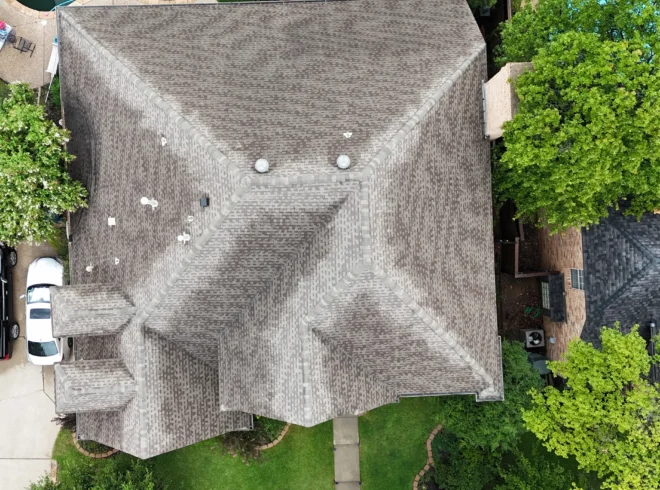
Do you notice black lines along your roof shingles? They often see black streaks on rooftop surfaces, particularly on asphalt shingles. They can appear as dirt or just discoloration, but could signal algae growth, moisture, or other roof issues.
Not all dark stains indicate roof decay. But knowing what may be causing these streaks can help you determine whether you need to clean or hire a professional for an inspection.
What Causes Black Streaks on a Roof?
The common cause is blue-green algae, especially Gloeocapsa magma. It can spread on the asphalt shingles and cause dark streaks or patches.
Algae can grow in moist conditions, shade, high-humidity areas, and where sunlight is limited. If roofs remain damp for an extended time, they may be more susceptible to appearing stained.
Sometimes the discolouration might also be caused by dirt, organic material, and growth caused by moisture.
Roof Algae vs. Mold: What’s the Difference?
Being able to recognize roof algae vs. mold can help homeowners determine what they are witnessing.
Algae looks like dark green, blue-green, gray, or black lines on shingles. It tends to creep up slowly and is particularly visible when it occurs on lighter coloured roofs.
Mold is typically found in areas that remain moist for extended periods and may manifest as darker patches or spots. Water leakage and poor ventilation can also lead to mold growth.
Sometimes it is difficult to differentiate one type of growth from another from the ground. A roofing expert can examine the roofing surface and surrounding areas to see if there is a bigger moisture issue.
Do Black Stains on Shingles Cause Damage?
Not all stains imply imminent structural damage. But if these black stains are ignored for years, they can bring about additional issues.
Algae is not a cause of roof damage that happens overnight, but over a period of time, heavy growth can impact the look of roofing shingles and potentially be a factor in roof deterioration. Staining can also give an otherwise well-maintained roof a shabby appearance.
But more importantly, stains often occur with other roof issues. An inspection might be beneficial if there is discoloration close to flashing, valleys, vents, chimneys, or where water pools.
Does Algae Cause Shingle Damage?
Many homeowners wonder if they should be concerned about algae damage to shingles.
The main impact of algae is on the aesthetics of a roof, but with continued growth, it can cause a roofing material to deteriorate over time. It can also trap moisture on the surface of the shingle.
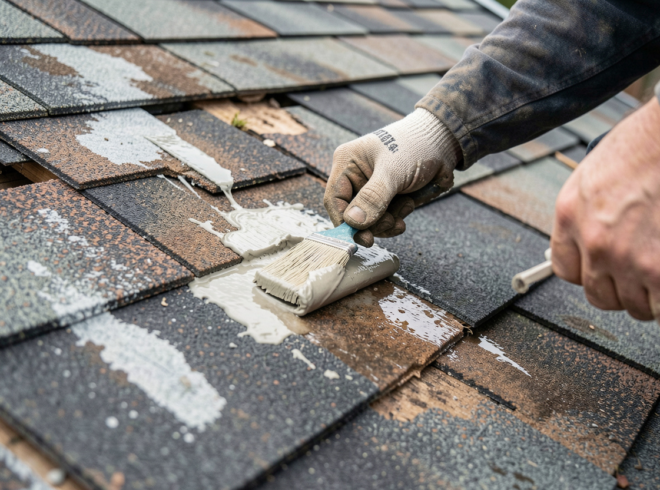
Another worry is faulty cleaning. If the shingles are scrubbed too hard or treated with harsh chemicals, protective granules can be knocked off, reducing the life of the roof.
This is why roof cleaning should be done with care. The ultimate objective is to get rid of unwanted growth without harming the shingles beneath.
Also Read: What type of shingles are best for my roof?
Are Roof Stains Harmful?
So, are roof stains harmful? This is because it depends on the causes of the problems.
If there is some algae staining and it does not have a major impact on the pool, it is likely to be a cosmetic problem. If the staining is widespread, the growth keeps coming back, or the shingles are stained with some damage, then it’s a subject of a more thorough investigation.
Be alert for signs of trouble like:
- Any shingles missing or cracked
- Shingles that are curled or buckled
- Excessive granule loss
- Roof with soft areas
- Ceiling or wall stains caused by water
- Damp attic insulation
- Damaged flashing
- Musty odors in the attic
Why is Roof Ventilation Important?
Moisture and heat control are important considerations for good attic ventilation.
A warm, moist attic can cause condensation to form on roof decking and other surfaces when the air is warm and moist. If the moisture is not removed, it may cause staining, wood rot, and other issues.
Attic conditions can be controlled by proper intake and exhaust ventilation. But existing algae or damage to roofing materials cannot be removed or repaired with ventilation.
Some stains may be just surface growth, and some may be due to a larger moisture problem. A professional inspection can help ascertain the difference.
Key Takeaways
- Algae growth is the most typical reason for black roof streaks.
- Algae may be encouraged by moisture, shade, and poor sunlight.
- Algae and mold are different, but can resemble one another at times.
- Not all roof stains indicate roof damage.
- Aggressive cleaning can cause damage to asphalt shingles.
- Any stains and leaks, damaged shingles, or moisture in the attic should be addressed professionally.
- Common roof maintenance practices can be used to identify issues before they get worse.
Summary
Dark roof streaks are not uncommon, but should not be neglected. They are often due to algae and mainly for cosmetic reasons. Sometimes, though, the stain problem persists even in the absence of moisture issues or old roofing material.
Understanding these distinctions could help you decide how to clean, repair, or replace your roof.
Protect your Roof with 911 Exteriors Roofing and Construction
Don’t let an unattractive roof stain turn into a bigger roofing problem. Call experts at 911 Exteriors Roofing and Construction now to keep your roof in the best condition.

Ash Abraham is a seasoned exterior remodeling professional and trusted industry expert at 911 Exteriors, specializing in roofing, siding, gutters, and exterior restoration services. With years of hands-on experience in residential and commercial exterior projects, Ash brings practical expertise, technical knowledge, and customer-focused solutions to every project.
Recent Posts
September 21, 2026
How Roof Valleys Fail and Why Valley Leaks Need Prompt Attention
September 18, 2026
What Does Granule Loss From Asphalt Shingles Mean?
September 14, 2026
Roof Flashing Failure: Warning Signs Around Chimneys, Vents and Skylights