How Roofing Contractors Help You Maximize Your Insurance Claim
A roof rarely picks a convenient time to fail. It gives in during a midnight storm or right before guests arrive for the holidays. By the time buckets are lined up on the floor, someone mentions calling the insurance company. That is when things start to feel less straightforward.
Most people file maybe one or two claims in their lifetime. Roofing contractors, on the other hand, see them every season. The difference in experience shows quickly. Roof insurance claim assistance is not just about climbing up and checking shingles. It is about understanding how damage, documentation, and insurance policies intersect in real life.
The Inspection Is More Than a Quick Look
From the ground, everything can seem fine. A few shingles out of place, nothing dramatic. Up close, it is usually another story.
Contractors who provide roof insurance claim assistance take their time with inspections. They check for hail bruising that does not show in photos. They look for lifted tabs that break the seal and invite slow leaks. They inspect flashing around vents and chimneys where water likes to sneak in quietly.
Typical findings often include:
- Creased shingles after high winds
- Subtle dents from hail impact
- Granule loss that weakens the surface
- Soft spots in decking beneath the top layer
These details matter because insurance companies rely heavily on documentation. If damage is not properly recorded, it might as well not exist in the claim file. A thorough inspection sets the tone for everything that follows.
Making Sense of the Adjuster’s Report
When the insurance adjuster sends over the estimate, it can look official and final. Line items, measurements, cost breakdowns. It feels complete. But contractors who regularly handle roof insurance claim assistance know that reports are not always comprehensive.
Sometimes ridge caps are missing from the scope. Sometimes ventilation upgrades required by local code are not included. Occasionally, labor rates in the report lag behind current market prices, especially after a widespread storm.
Instead of turning it into a confrontation, experienced contractors compare their estimate side by side with the adjuster’s version. They point out discrepancies calmly and back them up with photos, measurements, and code references. That steady approach often leads to revisions without unnecessary friction.
Homeowners are often surprised at how much detail can be negotiated simply by presenting clear evidence.
Avoiding Early Decisions That Backfire
After damage happens, the instinct is to fix it immediately. No one wants water dripping into the attic. Temporary repairs are necessary. Permanent ones can complicate things.
Roof insurance claim assistance usually includes guidance during those first few days. Contractors explain the difference between emergency mitigation and full replacement. They remind homeowners to take clear photos before anything is altered. They suggest keeping every receipt related to temporary protection.
A few simple habits can protect the claim:
- Report damage promptly
- Do not discard damaged materials before inspection
- Keep written records of conversations with the insurer
- Wait for claim approval before major repairs
It sounds basic, but stress makes people rush. Having someone experienced can slow the process down and prevent costly mistakes later.
Getting the Estimate to Reflect Reality
Material costs shift. Labour demand spikes after storms. Disposal fees and permit requirements vary by city. Insurance software attempts to track these changes, yet it does not always capture real-time conditions.
Roof insurance claim assistance involves preparing a detailed estimate based on current pricing and local regulations. Contractors account for underlayment, flashing replacement, drip edge, and ventilation adjustments. If building codes require upgrades during replacement, those costs are documented clearly.
This is where homeowners often see the value. A claim that looks sufficient on paper may fall short once the project begins. A contractor who understands both construction and insurance language helps close that gap before work starts.
Also Read: How to Respond If Your Roof Claim Is Denied or Underpaid
Commercial Properties Add Another Layer
Residential roofs are one thing. Commercial properties are another entirely. Flat systems, membrane layers, rooftop equipment. The scale alone changes the conversation.
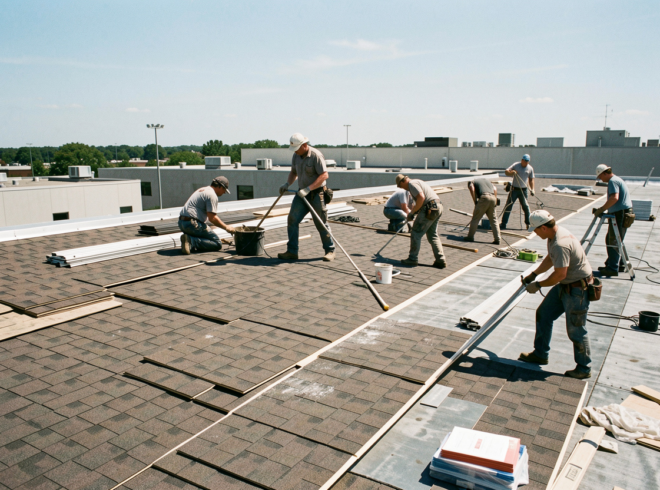
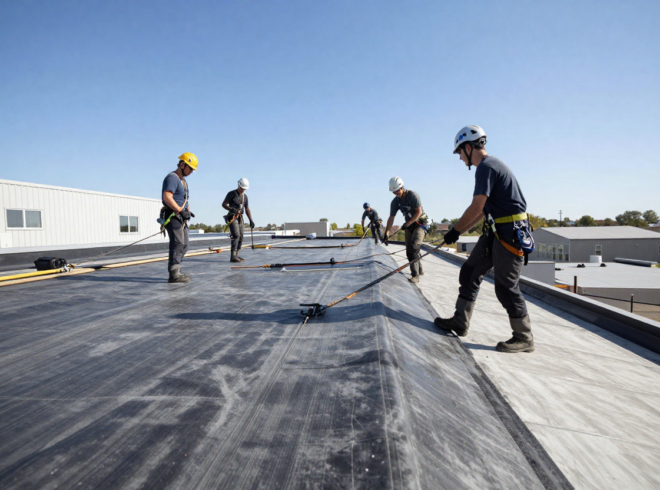
Commercial roofing contractor services are especially important when businesses file claims. Damage to a commercial roof can interrupt operations, affect tenants, or expose expensive equipment to moisture. Time becomes a major factor.
Contractors offering commercial roofing contractor services document large surface areas methodically. They understand TPO, EPDM, metal panels, and built-up systems. They also recognise that commercial insurance policies often contain different deductibles and coverage limits.
Having professionals who specialise in commercial roofing contractor services involved early keeps the claim aligned with the actual roofing system in place. Without that clarity, adjusters may underestimate the scope simply because they are unfamiliar with the system’s complexity.
Being Present When It Counts
The adjuster’s visit can feel like a quiet turning point. Measurements are taken. Notes are written. Decisions begin forming.
Contractors providing roof insurance claim assistance often attend that inspection. They walk the roof together, pointing out documented areas of concern. It is not dramatic. Just practical. When both sides look at the same hail impact or lifted seam, disagreements tend to shrink.
For business owners, having commercial roofing contractor services represented during the inspection can make a noticeable difference. Technical explanations about insulation layers or membrane seams are easier when coming from someone who installs them regularly.
When Hidden Damage Surfaces
Sometimes the real trouble is not visible until tear-off begins. Saturated insulation, rotted decking, compromised fasteners. At that point, the original claim amount may no longer cover the full repair.
Roof insurance claim assistance continues even then. Contractors submit supplements with updated photos and revised costs. It adds time, yes, but it ensures the repair is done correctly without cutting corners to fit an outdated budget.
For larger buildings, commercial roofing contractor services play a similar role. Quick documentation and communication prevent long delays that could disrupt business further.
Restoring More Than Just Shingles
Filing a claim is rarely anyone’s favourite experience. It combines paperwork, uncertainty, and the lingering frustration of storm damage. What roofing contractors really provide, beyond materials and labour, is direction.
Roof insurance claim assistance keeps the process grounded in facts instead of assumptions. It brings structure to conversations that might otherwise feel overwhelming. And when commercial roofing contractor services are involved for business properties, that guidance often determines how smoothly operations resume.
At the end of the project, the goal is simple. A roof restored properly, a claim settled fairly, and no lingering sense that something was overlooked along the way.
Recent Posts

February 25, 2026
How Roofing Contractors Help You Maximize Your Insurance Claim
February 20, 2026
Metal Roof vs Asphalt Shingles: Which Lasts Longer and Costs Less?
January 28, 2026
How to Budget for a Commercial Roof Replacement Without Surprises