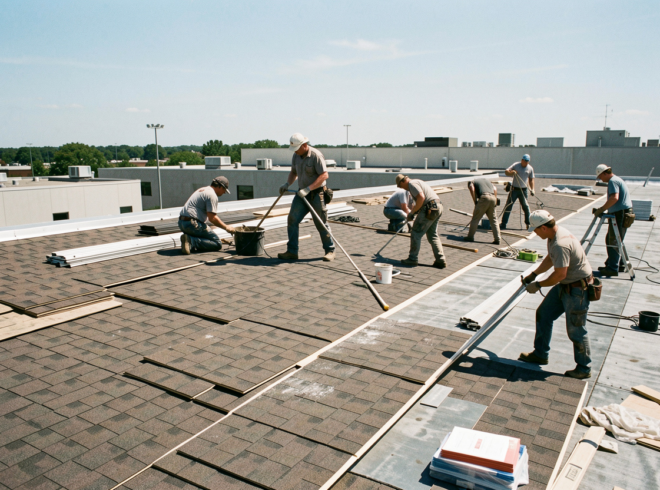
How Long Does It Take to Replace a Residential Roof From Start to Finish?
A roof rarely fails all at once. It gives small hints. A lifted shingle after a storm. Grit in the gutter. A faint stain is spreading across the ceiling. By the time a homeowner starts asking about the residential roof replacement timeline, the decision has usually been sitting in the back of their mind for months.
The honest answer is that most standard homes can have a new roof installed in one to three days. But that quick estimate barely scratches the surface. The real residential roof replacement timeline stretches beyond the days when shingles are actually nailed down.
The Planning Stage
Before any hammer touches the roof, there is a quieter stretch of time that people often forget to count.
Scheduling an inspection, gathering estimates, choosing materials, reviewing contracts, and securing permits can take anywhere from one to three weeks. In busy seasons, it may take longer. Spring and late summer tend to fill contractors’ calendars fast.
This early phase shapes the entire residential roof replacement timeline. A delay in permit approval or a backordered material can quietly push everything back. Homeowners who ask, how long does roof replacement take?, are often surprised to learn that preparation can take more time than the installation itself.
Delivery and Preparation
Once the contract is signed and materials are ordered, things start to feel real. Shingles arrive. Dumpsters appear in the driveway. Neighbours begin to notice.
Material delivery usually happens a day or two before work begins. Crews protect landscaping, cover windows, and set up safety equipment. This part of the residential roof replacement timeline moves quickly, but it matters. A careful setup prevents damage and keeps the worksite organised.
Weather can interrupt even the best planning. A sudden stretch of rain may pause the start date. Roofing is not forgiving when it comes to moisture.
Tear-Off and Inspection
The first active day of work is often the loudest. Removing old shingles, underlayment, and flashing exposes the roof deck beneath. For an average-sized home, a tear-off can take half a day to a full day.
At this stage, hidden issues sometimes surface. Rotten decking or damaged flashing may need replacement. These repairs extend the residential roof replacement timeline, sometimes by several hours, occasionally by a full extra day.
This inspection step is part of the broader roof installation process, even if it feels like demolition rather than construction. Skipping careful inspection risks shortening the life of the new roof.
Installing the New Roof
With the deck repaired and underlayment in place, the visible transformation begins. Shingles are installed row by row. Flashing is sealed around chimneys and vents. Ridge caps finish the peak.
For most asphalt shingle roofs, installation takes one to two days. Larger homes, steep pitches, or complex designs with multiple valleys can add time. Metal or tile roofs may extend the residential roof replacement time significantly, sometimes requiring several additional days.
Crew size also matters. A larger team can complete work faster, but only if coordination remains tight. Speed without precision can compromise the quality of the roof installation process.
Cleanup and Final Inspection
By the final afternoon, the heavy work is done. What remains is cleanup and inspection.
Crews sweep for nails with magnetic rollers, remove debris, and haul away old materials. A final walkthrough ensures flashing is sealed and shingles are properly aligned. This closing stage might take a few hours, yet it completes the residential roof replacement timeline in a meaningful way.
Homeowners often judge the experience by how the property looks afterward. A tidy yard and clear driveway leave a different impression than scattered debris.
Also Read: How long does a roof last?
Factors That Change the Timeline
Every house has its own personality. Some roofs cooperate. Others resist.
Several factors can extend or shorten the residential roof replacement timeline:
- Roof size and complexity
- Material type
- Weather conditions
- Structural repairs needed
- Permit processing times
- Crew availability
A simple ranch home on a clear week may move from tear-off to completion in two days. A multi-story home with intricate angles during a rainy month could take a week or more from start to finish.
When people ask how long does roof replacement take?, they are really asking how their specific home will behave once the shingles come off.
What Homeowners Should Expect
From the first call to the final inspection, most projects span two to four weeks in total. Only a few of those days involve active construction, but the surrounding logistics stretch the residential roof replacement time.
There will be noise. There may be minor schedule shifts. Communication with the contractor makes a noticeable difference. Clear expectations keep the residential roof replacement timeline from feeling unpredictable.
Some homeowners choose to stay home during the work. Others leave for the day to avoid the disruption. Either choice works, as long as pets and vehicles are kept safely away from the work zone.
The Bigger Picture
A roof can last twenty to thirty years, sometimes longer. When viewed against that lifespan, a few weeks of planning and a couple of loud days on site feel relatively small.
Understanding the residential roof replacement timeline helps set realistic expectations. It also answers the lingering question of how long roof replacement takes. The answer depends on materials, weather, and preparation, but most projects are measured in days for installation and weeks for the full roof installation process.
Patience during the residential roof replacement time pays off. A well-installed roof stands quietly for decades, asking for little in return.
Recent Posts

February 25, 2026
How Roofing Contractors Help You Maximize Your Insurance Claim
February 20, 2026
Metal Roof vs Asphalt Shingles: Which Lasts Longer and Costs Less?
January 28, 2026
How to Budget for a Commercial Roof Replacement Without Surprises